ReliefConcept

Spain

Immerse yourself in vibrant culture, stunning architecture, and the passionate spirit of the Iberian Peninsula

Travel Guide

Experience Spanish Passion

Spain captivates with its vibrant energy, artistic heritage, and diverse landscapes. From the modernist marvels of Barcelona to the Moorish splendor of Andalusia, from sun-soaked Mediterranean beaches to historic plazas and Gothic cathedrals, Spain offers an intoxicating blend of tradition and innovation. Discover the legacy of great artists like Gaudí, Dalí, and Picasso, savor world-renowned cuisine and wines, experience flamenco passion, and embrace the Spanish art of living life to the fullest.

Travel Guide

Must-Visit Attractions

Sagrada Familia

Barcelona, Catalonia

Sagrada Familia

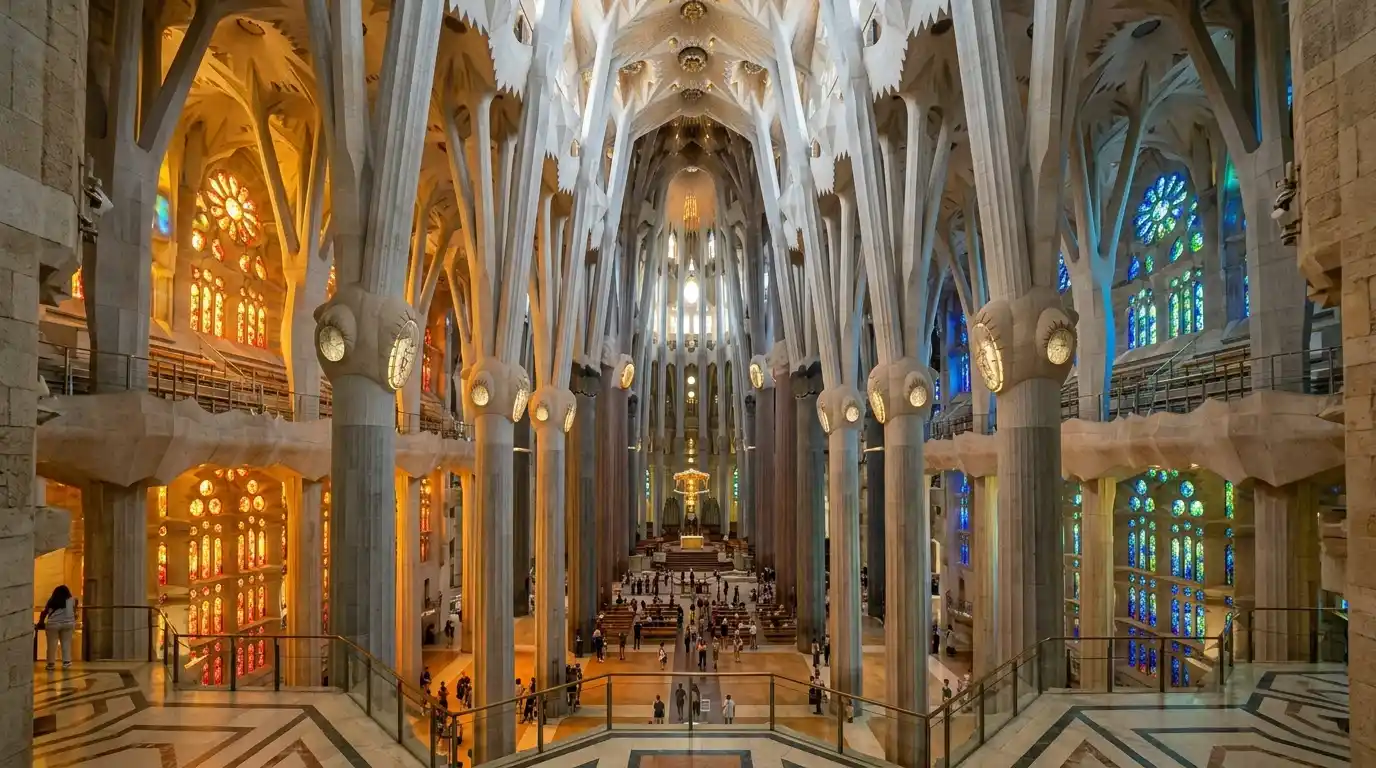
Antoni Gaudí's masterpiece, the Sagrada Familia, is Barcelona's most iconic landmark and one of the world's most extraordinary churches. Construction began in 1882 and continues today, with completion expected around 2026, making it a 144-year project. This UNESCO World Heritage Site represents Gaudí's unique vision of Gothic and Art Nouveau architecture combined with nature-inspired forms. The basilica features three grand facades: the Nativity Facade, decorated with sculptures celebrating Christ's birth; the Passion Facade, depicting his crucifixion with stark, angular forms; and the Glory Facade, still under construction, which will serve as the main entrance. Inside, the nave resembles a forest, with columns branching like trees toward the vaulted ceiling, which features intricate geometric patterns. Stunning stained glass windows flood the interior with colored light, creating an ethereal atmosphere. The towers, when complete, will number 18, representing the Twelve Apostles, the Virgin Mary, the four Evangelists, and Jesus Christ, making it a monument of unprecedented scale and symbolism.

  • Unique Architecture
  • Stained Glass
  • Tower Views
  • Museum
Alhambra Palace

Granada, Andalusia

Alhambra Palace

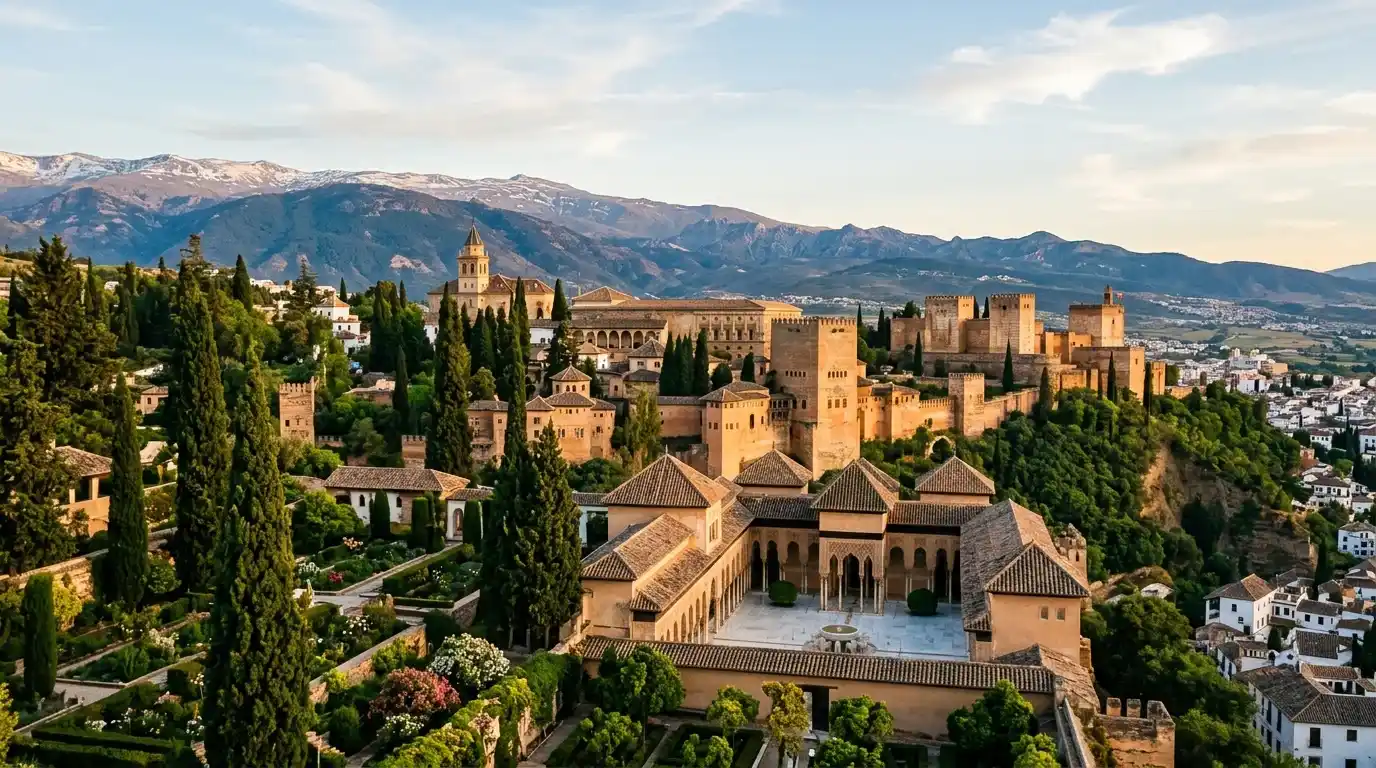
The Alhambra is a breathtaking fortress complex that represents the pinnacle of Moorish architecture in Europe. Built primarily in the 13th and 14th centuries during the Nasrid Dynasty, this UNESCO World Heritage Site sits majestically on a hilltop overlooking Granada and the Sierra Nevada mountains. The palace complex consists of several distinct areas: the Alcazaba fortress, the royal Nasrid Palaces, the Palace of Charles V, and the stunning Generalife gardens. The Nasrid Palaces are the crown jewel, featuring the Court of the Lions with its famous fountain supported by twelve marble lions, the Hall of the Ambassadors with its geometric wooden ceiling, and the Hall of the Two Sisters with its spectacular stalactite dome. Every surface is adorned with intricate Islamic geometric patterns, arabesques, and Arabic calligraphy, creating one of the world's finest examples of Islamic art and architecture. The Generalife gardens, with their pools, fountains, and landscaped terraces, provide a peaceful retreat showcasing the Moorish vision of paradise on earth.

  • Nasrid Palaces
  • Court of Lions
  • Generalife Gardens
  • Moorish Architecture
Park Güell

Barcelona, Catalonia

Park Güell

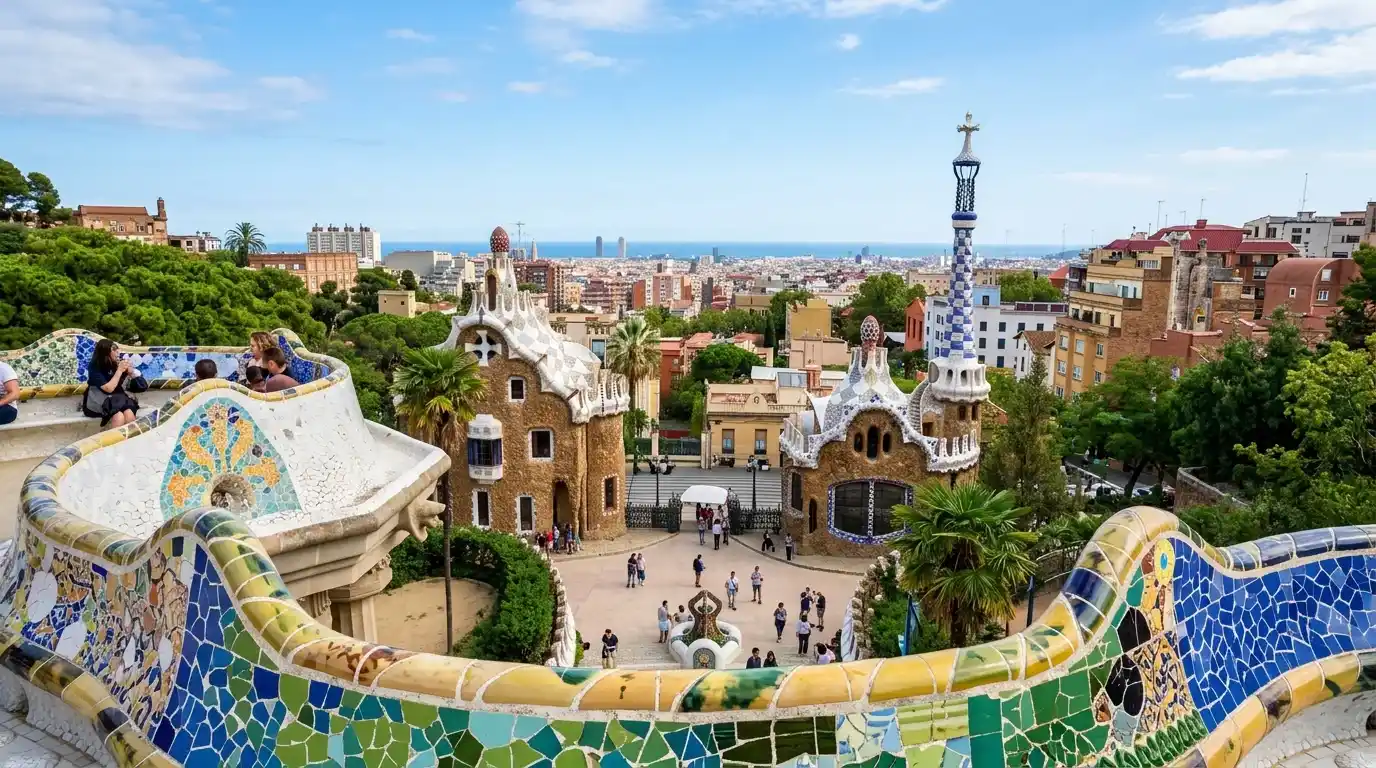
Park Güell is Antoni Gaudí's whimsical public park that combines imaginative architecture with stunning natural landscapes, offering panoramic views over Barcelona. Originally conceived as a residential development, the project was transformed into a public park in 1926 and is now a UNESCO World Heritage Site. The park's entrance features two fairytale-like buildings with colorful ceramic mosaics and undulating forms that seem to grow organically from the earth. The famous serpentine bench, covered in broken ceramic tiles (trencadís) in vibrant colors, winds along the edge of the main terrace, providing both seating and a work of art. The Hypostyle Hall, with its 86 Doric columns, was designed as a marketplace and features a ceiling decorated with circular mosaics. Throughout the park, Gaudí incorporated natural forms, creating columns that resemble tree trunks and structures that blend seamlessly with the rocky hillside. The park's Dragon Stairway, featuring the famous mosaic salamander (El Drac), has become one of Barcelona's most photographed symbols.

  • Mosaic Salamander
  • Serpentine Bench
  • City Views
  • Gaudí Architecture
Plaza de España

Seville, Andalusia

Plaza de España

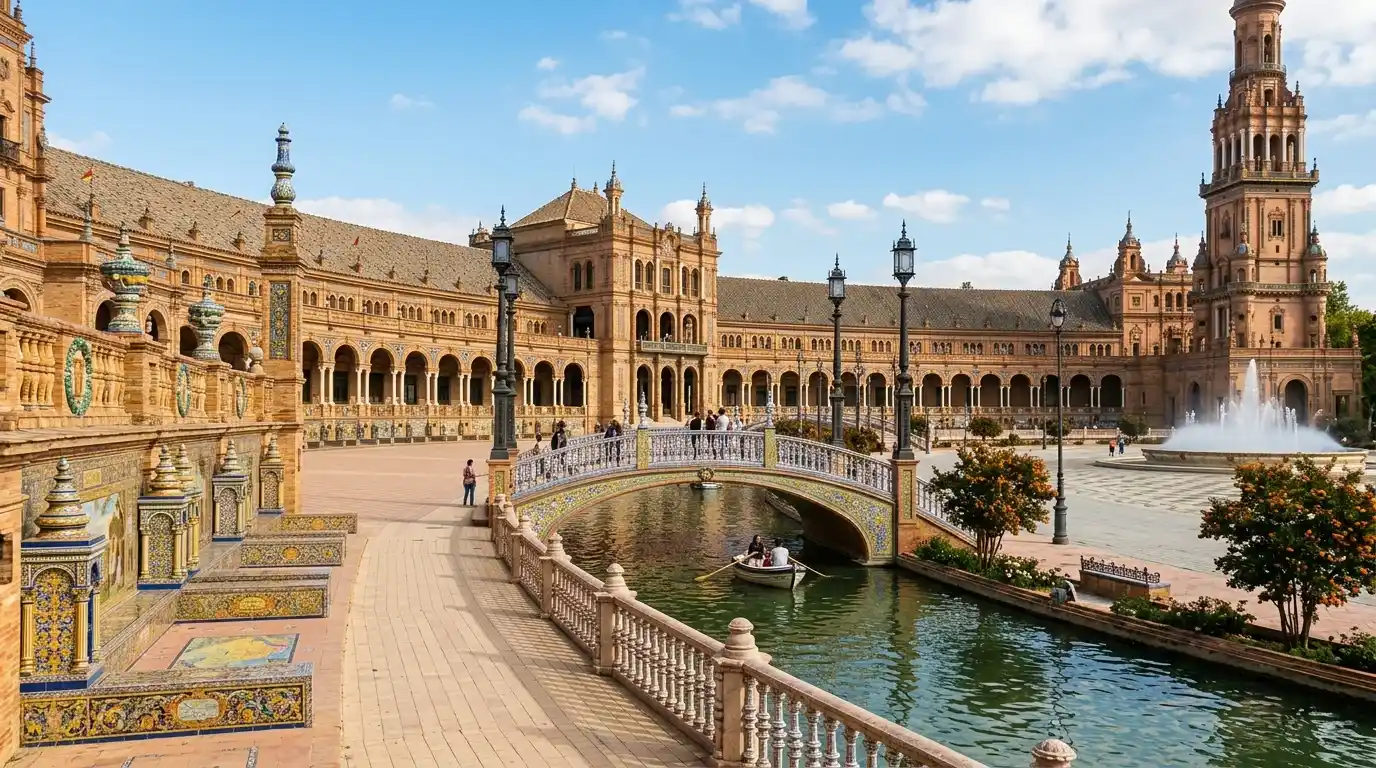
Built for the Ibero-American Exposition of 1929, Plaza de España is a magnificent semicircular plaza that represents one of Spain's most spectacular architectural achievements. Designed by Aníbal González in a Renaissance Revival style mixed with Moorish influences, the plaza spans 50,000 square meters and is surrounded by a 500-meter canal crossed by four decorative bridges representing the ancient kingdoms of Spain. The main building curves gracefully around the plaza, featuring a gallery with 58 alcoves, each representing a different Spanish province and decorated with beautiful ceramic tile work (azulejos) depicting historical scenes. Four ornate bridges symbolize the four historic kingdoms of Spain. The two tall towers at either end, standing 74 meters high, offer a striking silhouette against the Seville skyline. The central fountain adds elegance, while the ceramic tile benches provide colorful seating. Today, the plaza serves as a symbol of Seville's rich cultural heritage and has been featured in numerous films, including Star Wars and Lawrence of Arabia, testament to its timeless beauty.

  • Ceramic Tilework
  • Canal Bridges
  • Provincial Alcoves
  • Historic Architecture

Travel Guide

Travel Tips

Best Time to Visit

Spring (March-May) and autumn (September-November) offer ideal weather. Summer can be extremely hot, especially in southern Spain. Winter is mild in coastal areas but cooler inland.

Advance Booking

Book Sagrada Familia and Alhambra tickets weeks in advance - they sell out quickly. Many attractions offer skip-the-line tickets online. Consider guided tours for deeper historical insights.

Spanish Schedule

Embrace the Spanish schedule: lunch is 2-4 PM, dinner starts at 9 PM or later. Siesta time (2-5 PM) sees many shops close. Nightlife begins late and continues until dawn.

Cultural Notes

Spaniards are warm and social. Learn basic Spanish phrases - it's appreciated. Tapas culture is central to Spanish life. Dress is generally casual but stylish, especially in cities.