ReliefConcept

Greece

Journey through ancient history, stunning islands, and the birthplace of Western civilization

Travel Guide

Experience Greek Splendor

Greece enchants visitors with its perfect blend of ancient wonders and natural beauty. From the classical ruins of Athens to the whitewashed villages of the Cyclades, from sacred monasteries perched on rock pillars to pristine Mediterranean beaches, Greece offers a journey through 5,000 years of history and culture. Explore archaeological treasures, savor delicious Mediterranean cuisine, experience warm hospitality, and discover why this cradle of Western civilization continues to captivate travelers from around the world.

Travel Guide

Must-Visit Attractions

Acropolis of Athens

Athens

Acropolis of Athens

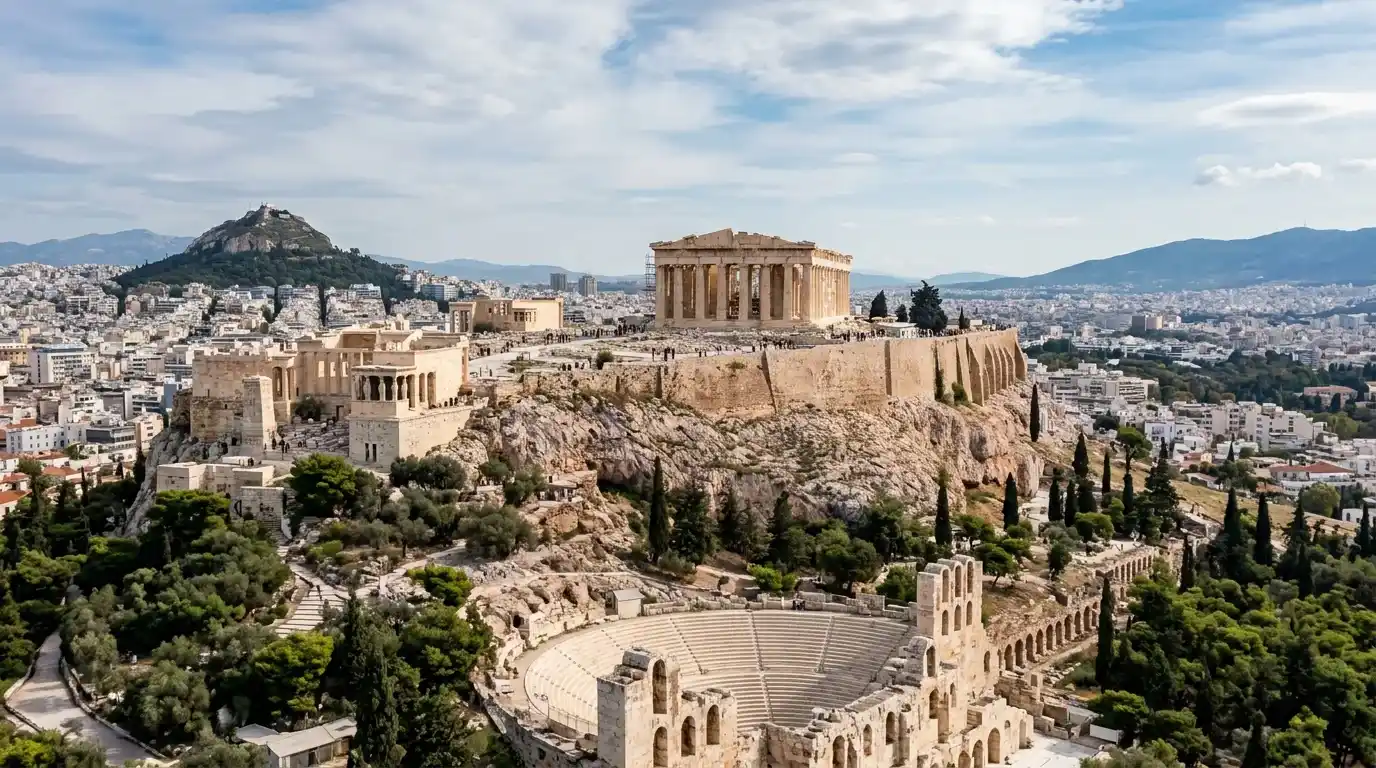
Perched 150 meters above Athens, the Acropolis stands as the ultimate symbol of ancient Greek civilization and Western culture. This UNESCO World Heritage Site, dating back to the 5th century BC, represents the golden age of Athens under Pericles. The crown jewel is the Parthenon, a temple dedicated to the goddess Athena, featuring 46 outer columns and once adorned with elaborate sculptures and friezes. The Erechtheion, with its famous Caryatids (sculpted female figures serving as columns), showcases the architectural ingenuity of ancient Greeks. The Temple of Athena Nike, a small but perfectly proportioned structure, celebrates Athenian victories. The Propylaea, the monumental gateway, demonstrates the grandeur befitting this sacred hilltop. From the Acropolis, visitors enjoy panoramic views of modern Athens sprawling beneath ancient ruins. The site embodies the birthplace of democracy, philosophy, and classical art, offering a profound connection to the foundations of Western civilization.

  • Parthenon Temple
  • Erechtheion
  • Panoramic Views
  • Ancient Theater
Santorini

Cyclades Islands

Santorini

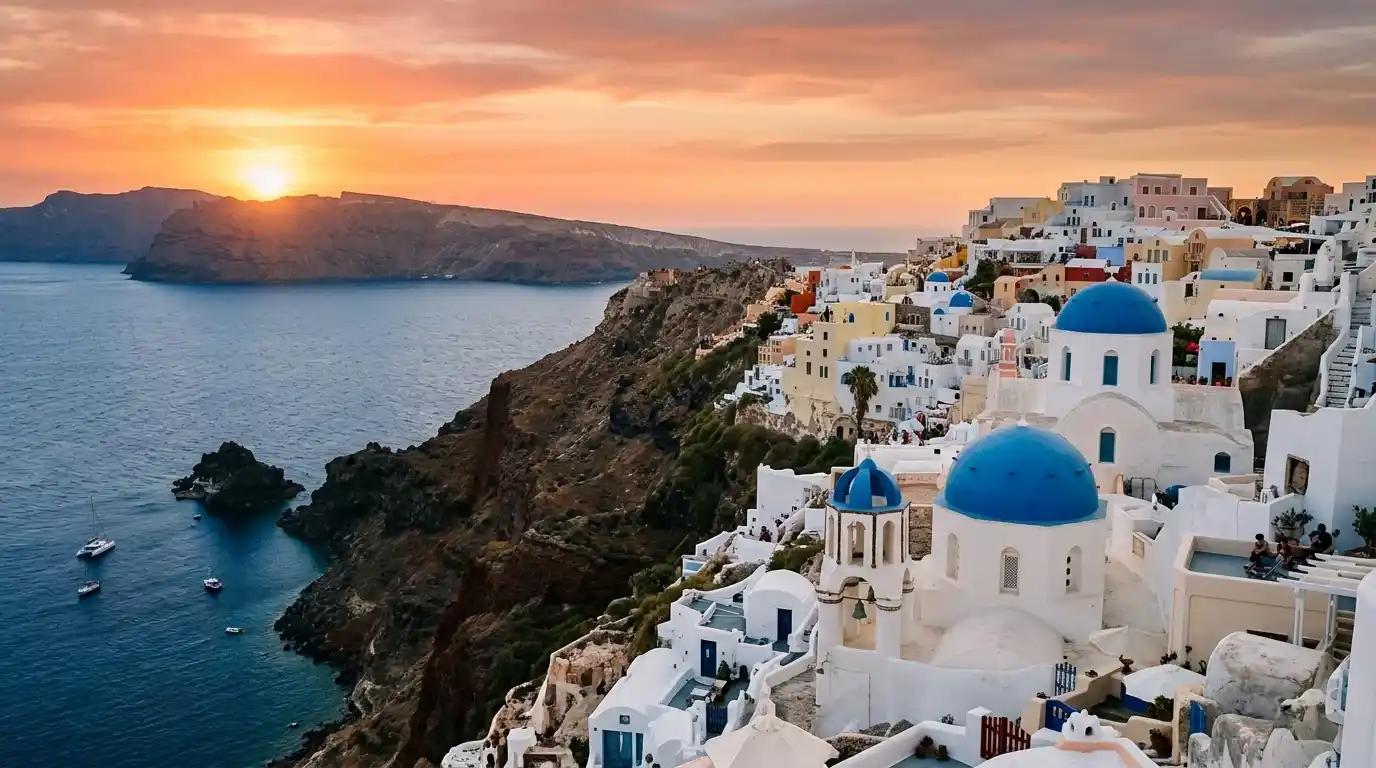
Santorini is a crescent-shaped island created by one of history's largest volcanic eruptions around 3,600 years ago, resulting in the dramatic caldera that defines its stunning landscape today. The island's iconic whitewashed buildings with blue-domed churches perch precariously on clifftops, offering breathtaking views of the azure Aegean Sea. The main towns of Fira and Oia are architectural marvels, with traditional Cycladic houses cascading down the cliffs like frozen waterfalls. Oia is world-renowned for its spectacular sunsets, drawing visitors who gather nightly to witness the sun disappearing into the caldera. The island's volcanic beaches, including the unique Red Beach and Perissa's black sand beaches, offer distinctive Mediterranean experiences. Ancient Akrotiri, often called the "Minoan Pompeii," preserves a Bronze Age settlement buried by volcanic ash. Santorini's wineries produce distinctive wines from grapes grown in volcanic soil, creating flavors found nowhere else in the world.

  • Sunset in Oia
  • Caldera Views
  • Volcanic Beaches
  • Ancient Akrotiri
Delphi Archaeological Site

Central Greece

Delphi Archaeological Site

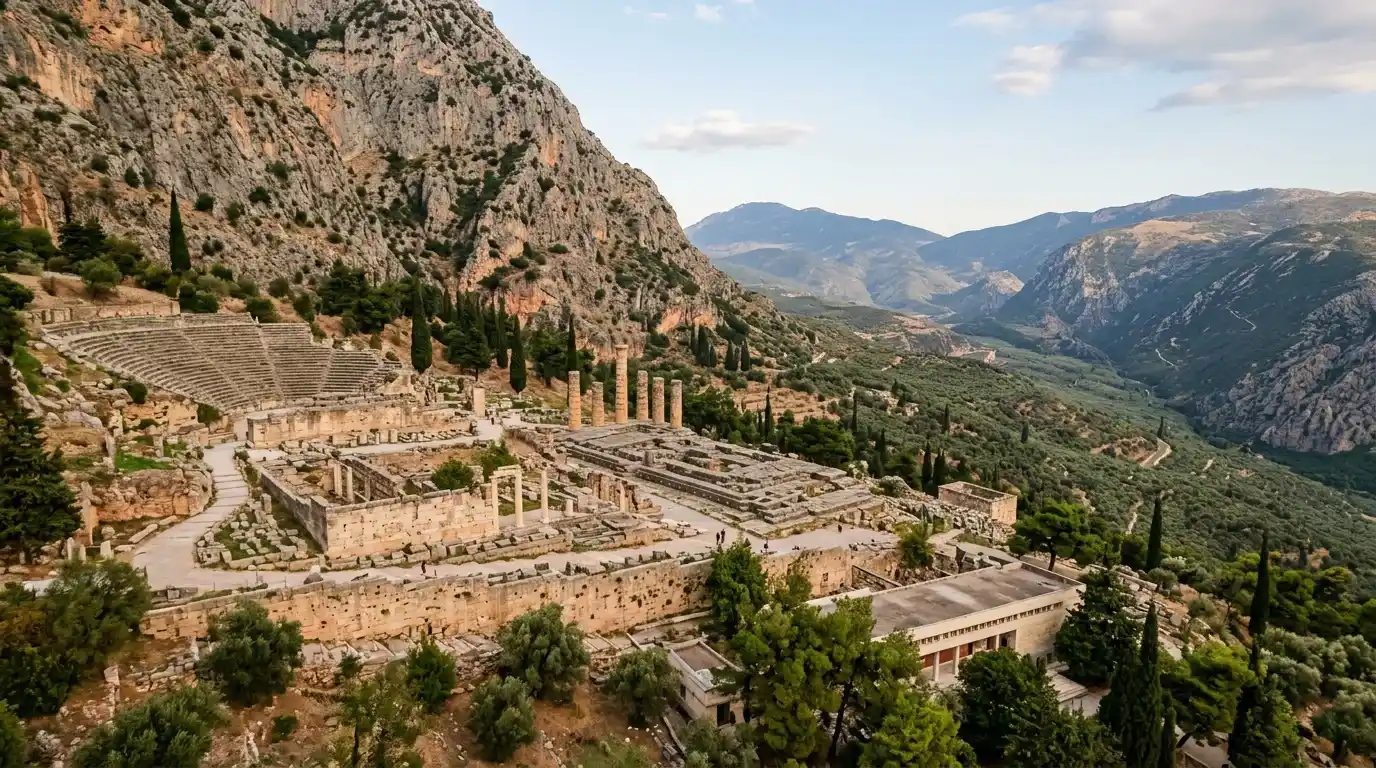
Nestled on the slopes of Mount Parnassus, Delphi was considered by ancient Greeks to be the center of the world, marked by the sacred Omphalos stone. For over a thousand years, this UNESCO World Heritage Site served as the most important oracle in the Greek world, where the Pythia priestess delivered prophecies that influenced major decisions of city-states and individuals. The Sanctuary of Apollo, with its remarkably preserved Temple of Apollo, was where these legendary consultations took place. The ancient theater, seating 5,000 spectators, offered performances with a backdrop of breathtaking mountain and valley views. The stadium, located at the site's highest point, hosted the Pythian Games, second only to the Olympics in importance. The Tholos, a circular building with three remaining columns, is one of ancient Greece's most photographed structures. The Archaeological Museum houses the famous Charioteer of Delphi bronze statue and other treasures. Walking through Delphi, surrounded by ancient ruins and stunning natural beauty, visitors experience the mystical atmosphere that made this place sacred for millennia.

  • Temple of Apollo
  • Ancient Theater
  • Archaeological Museum
  • Mountain Views
Meteora Monasteries

Thessaly, Central Greece

Meteora Monasteries

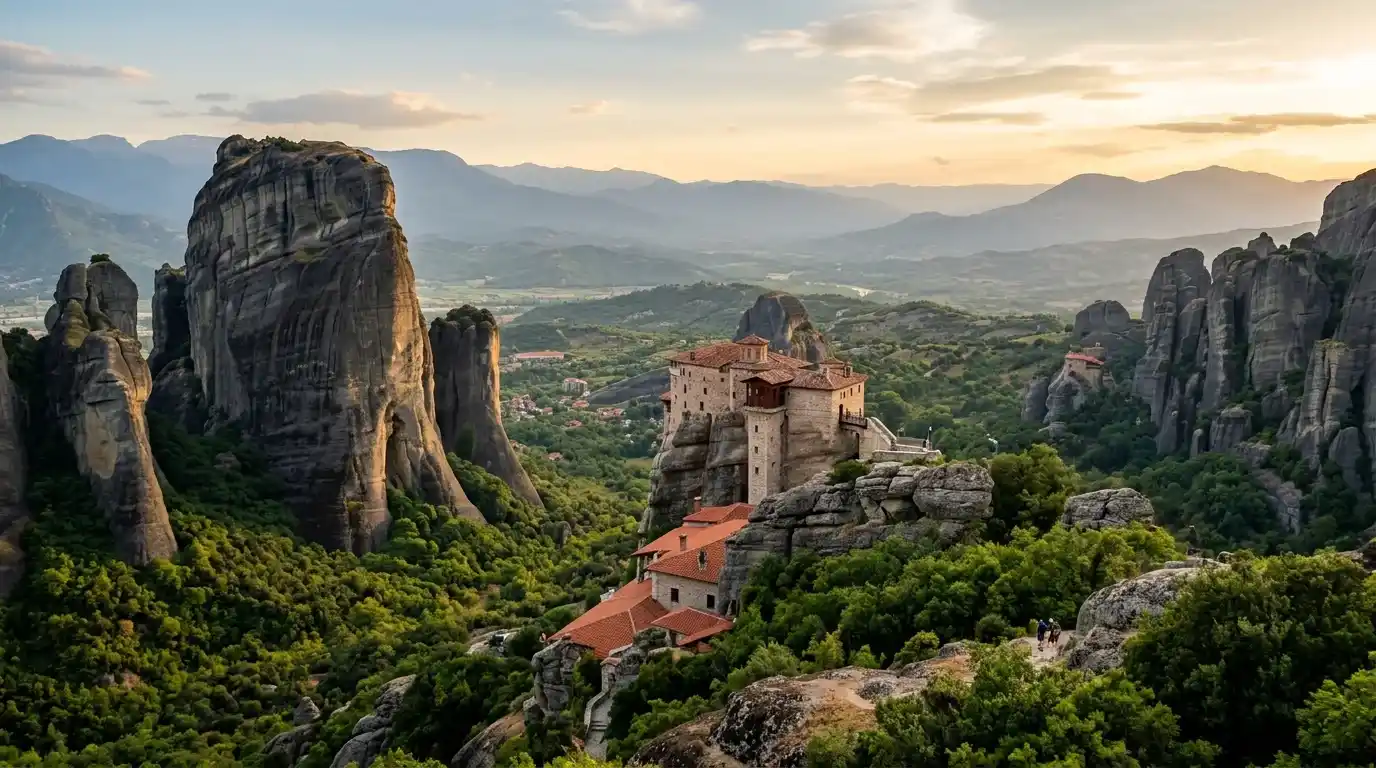
Meteora, meaning "suspended in air," is a geological marvel and spiritual sanctuary where Byzantine monasteries perch impossibly atop towering rock pillars rising up to 400 meters above the Thessalian plain. These sandstone formations, sculpted by wind and water over 60 million years, create a surreal landscape that seems otherworldly. In the 14th and 15th centuries, monks seeking spiritual isolation and protection from invaders built 24 monasteries on these natural stone towers, accessible only by rope ladders or nets hauled up by winches. Today, six monasteries remain active and open to visitors, preserving their magnificent Byzantine frescoes, precious manuscripts, and sacred artifacts. The Great Meteoron, the largest and oldest monastery, offers insights into monastic life and stunning views. The Monastery of Varlaam houses an impressive collection of religious treasures. Visiting requires climbing hundreds of stone steps carved into the rocks, but the journey rewards with breathtaking vistas and a profound sense of tranquility. This UNESCO World Heritage Site represents a unique fusion of human determination, spiritual devotion, and natural wonder.

  • Rock Formations
  • Byzantine Monasteries
  • Hiking Trails
  • Spiritual Heritage

Travel Guide

Travel Tips

Best Time to Visit

April to June and September to October offer perfect weather with fewer tourists. Summer (July-August) is peak season with hot temperatures and crowded islands. Winter is mild but some island services close.

Island Hopping

Ferry services connect the Greek islands extensively. Book tickets in advance during summer. High-speed ferries save time but cost more. Consider flying between distant islands to maximize your time.

Archaeological Sites

Arrive early to avoid crowds and heat at popular sites like the Acropolis. Wear comfortable shoes and bring sun protection. Many sites offer discounted or free entry on specific days.

Cultural Tips

Greeks are known for warm hospitality. Learn basic Greek phrases - locals appreciate the effort. Siesta time (2-5 PM) is sacred, with many shops closing. Dress modestly when visiting monasteries and churches.